
The reality of football ecosystem behind
the Red Sea
Reported by: Chan Wing-yiu Yoyo
The roar of 40,000+ voices echoing through the new Kai Tak Stadium feels like a fever dream for Hong Kong football—a full house packing the gleaming 50,000-seat venue, red scarves waving, chants shaking the former airport grounds. In June 2025, over 42,570 fans turned out for the national team's historic first home match there, clinching a dramatic 1-0 win over India. Momentum built: nearly 45,000 for the Bangladesh draw, and a record 47,762 against Singapore in qualifiers. Even friendlies and festivals have drawn close to 50,000, helping propel Kai Tak to the world's No. 3 venue for ticket sales in its debut year.
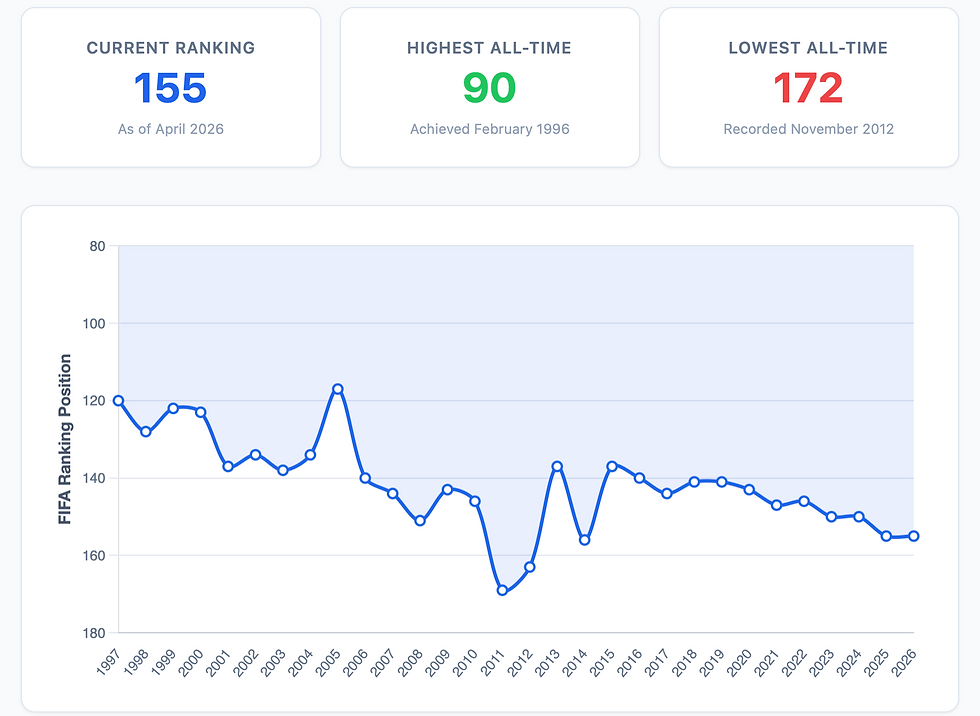
For a city whose national side ranks 155th globally—sandwiched between Ethiopia and the Solomon Islands—and whose domestic Premier League games often draw modest crowds of a few hundred to a couple thousand, this surge looks like football has finally arrived at a long-awaited peak.
But is the packed Kai Tak a sustainable trend, or a fleeting high fueled by novelty, a shiny new stadium, and rare international thrill? And behind the glamour, what's the daily grind like for those chasing pro dreams in Hong Kong—where salaries hover around HK$25,000 average, far from European riches, often requiring side jobs, sacrifices, and uncertain futures?

Photo credit to Hong Kong Tourism Board

Hong Kong Stadium in So Kon Po (built in 1953, rebuilt in 1994)
Kai Tak Sports Park is nothing short of a paradigm shift for Hong Kong. Built on the iconic grounds of the former Kai Tak International Airport, it is the largest piece of sports infrastructure in the city’s history.
Conceived to replace the aging, open-air Hong Kong Stadium, this HK$30 billion mega-precinct serves a triple mission: promoting community wellness, supporting elite athletes, and reclaiming the city's status as a premier destination for global mega-events.
The 28-hectare park is anchored by a 50,000-seat Main Stadium. Inspired by the "Pearl of the Orient," it features a retractable roof, a flexible pitch system, and advanced acoustic designs.
The football league system in Hong Kong is organised in a hierarchical, four-tier pyramid governed by the Football Association of Hong Kong, China or HKFA. The system features a mix of fully professional clubs at the top and semi-professional or amateur clubs in the lower divisions.
Hong Kong Premier League, established in 2014 to replace the old First Division as the pinnacle of the sport in the region, it represents the highest level of competition. The league currently consists of 10 teams.


BC Rangers
Kowloon City
Tai Po
Lee Man
Kitchee
Golik North
District
Eastern
Eastern District
HKFC
KC Southern
Below HKPL, the HKFA operates three interconnected divisions. These leagues are primarily semi-professional and amateur, including the first division, which is the highest amateur or semi-pro tier. Clubs here compete for the chance to turn professional and earn promotion to the Premier League. The rest are the Second Division and Third Division.
In recent years, a clear pipeline has formed between Hong Kong and Mainland China’s professional football leagues. For the brightest talents in HKPL moving north to play in the Chinese Super League (CSL) or China League One (CLO) has become the ultimate career goal. Crossing the border means higher income, better facilities and more audiences as football clubs invest in significantly larger budgets.
In fact, the current era of Hong Kong’s national team is heavily anchored by players plying their trade in the mainland, such as Matt Orr, representing Guangxi Pingguo Haliao in CLO and Shinichi Chan representing Shanghai Shenhua in CSL.
As the “red sea” of fans continues to rise in the stands of Kai Tak, the true challenge for Hong Kong football lies in bridging the massive gap between stadium euphoria and on-the-ground reality. To uncover what it takes to survive and thrive in this polarised ecosystem, I spoke with different stakeholders across the local game to find out the real story of Hong Kong football.
The latest game of
Hong Kong National team
Two decades of Hong Kong football through the eyes of
a legendary goalkeeper
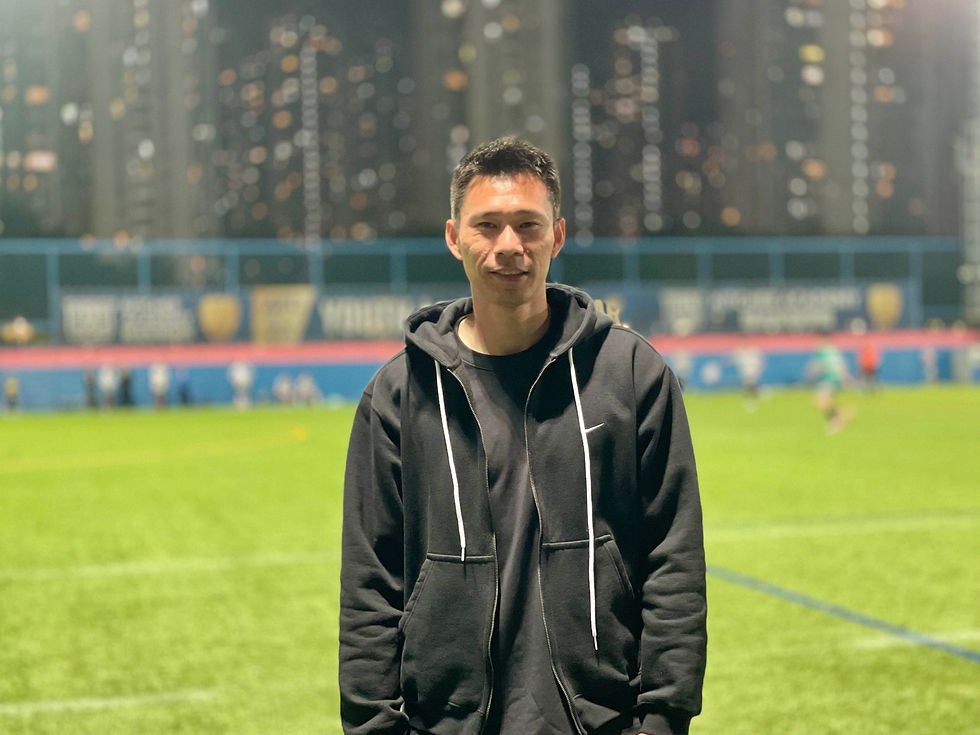
Yapp Hung Fai, 36, is widely regarded as one of Hong Kong's greatest-ever goalkeepers and a true legend in local football, with fans and media often hailing him as the “Hero” for his clutch saves and heroic performances that have repeatedly rescued the team in crucial moments. He holds the all-time record as the most-capped player, meaning he’s played the most, for the Hong Kong national team, with over 112 international appearances.
He is currently in recovery from his surgery because of his right knee's severe anterior cruciate ligament (ACL) tear during the game in October 2025, Hong Kong against Bangladesh. ACL injuries are a nightmare for every football player, as it usually takes almost a year of recovery and rehabilitation. Yapp says his recovery progress was at about 30 percent, hoping he will return to the pitch next season.

Representing Hong Kong since 2008, he has witnessed the ups and downs in Hong Kong football. “If we talk about local league attendance, I don’t think the change has been very big. On the contrary, the biggest change has been in Hong Kong national team matches. The fans’ support and their level of engagement are much higher than before,” said Yapp.
He wondered whether the current surge represents a lasting shift or merely another temporary peak. “I’m not sure if this is just another sudden high tide that will drop again. We’ve had many such cycles in the past. I hope this time it’s different.”
Yapp kept a clean sheet in Hong Kong's 3-0 friendly win over Cambodia on Oct. 15, 2024.
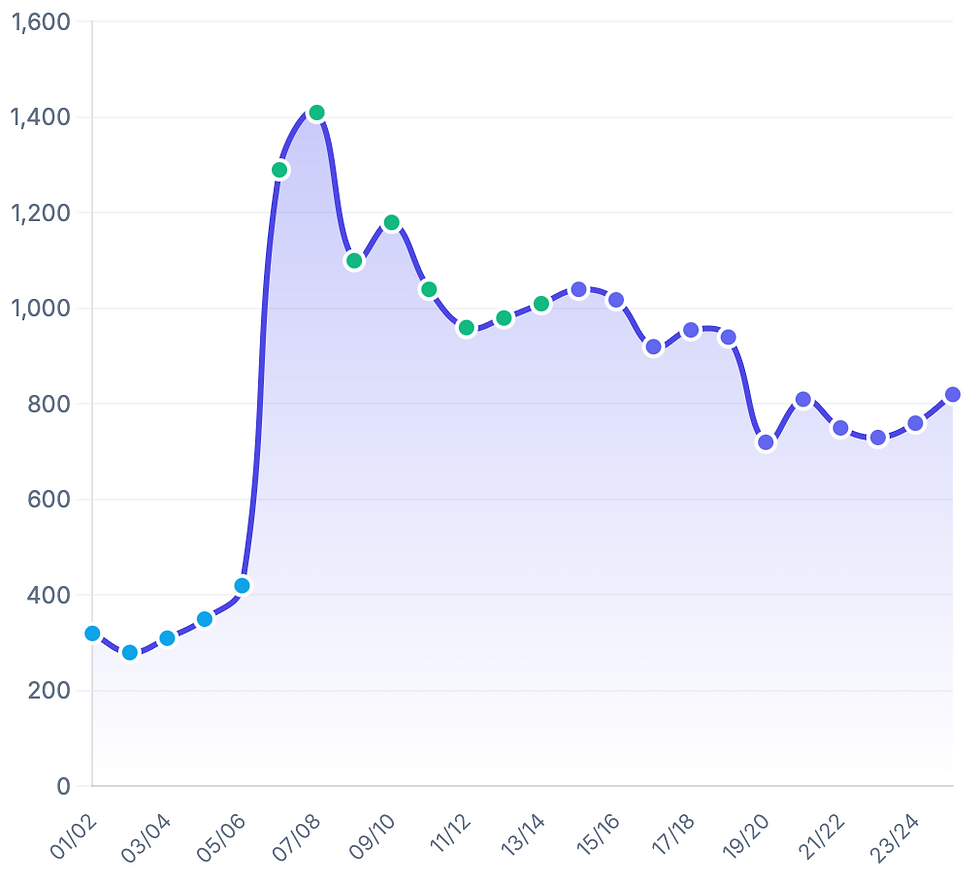
HKPL Attendance
-
The "Ice Age" Collapse (2001–2006): Local football nearly died in the early 2000s. Amidst fleeing sponsors and the SARS epidemic, average match attendance plummeted to a devastating low point.
-
The "Golden Thaw" Spike (2006–2011): Massive financial injections from new club owners—most notably Steven Lo revitalizing South China—rescued the league.
-
The Modern HKPL Baseline (2014–Present): The launch of the fully professional Premier League stabilised the core fanbase. Despite heavy disruptions during the COVID-19 pandemic, current attendance is recovering, averaging around 820 fans per match.
Average Fans Per Match
Having experienced previous waves of enthusiasm followed by decline, Yapp admitted he has grown accustomed to the pattern.
“I have felt discouraged before, but not this time. After going through different highs and lows, I’ve already gotten used to the ‘three-minute heat’ that Hong Kong football often has — people don’t watch consistently.”
He cited past examples where big matches drew crowds, but even moving games to the Hong Kong Stadium only attracted around ten thousand fans. However, he senses the current momentum is different because multiple positive factors have converged.
Yapp highlighted the impact of the new Kai Tak Sports Park,
“The impact of new and old venues is whether we can catch up with international standards,” he said. “Many places overseas already had stadiums of this level many years ago, but we only started having them last year when Kai Tak was completed. You can see that our pace is actually behind others.”
The difference in atmosphere is stark. “There is a huge difference between 40,000 people and 10,000–20,000. With the roof at Kai Tak, the echo makes the cheering even louder, which gives the home advantage.”
Watch the fans celebration after a goal
Recalling Hong Kong’s first match at the new venue against India, Yapp described how the crowd’s power affected the opposition: “The opponents had already scored and brought many of their own fans. But when Hong Kong attacked, the opposing players were clearly affected by the power of our fans.”
He hopes future matches at Kai Tak can consistently achieve a true full house, marking a genuine and sustained change.
Looking ahead, what Yapp most hopes to see in the next five to ten years is significantly higher attendance at local league matches.
“No matter how good the national team is, there are actually very few home matches in a year. For the local league, we play almost five matches every week. If we can build a solid base of fans there, we can amplify many things.”
He acknowledged the difficulty of this goal, pointing to Hong Kong’s unique challenges: its small size, lack of strong club rivalries, and absence of deep community or district-based identities that fuel passion in other football cultures.
Despite the hurdles, Yapp remains hopeful that the combination of the new stadium, stronger commercial interest, and growing fan belonging can help Hong Kong football move beyond short-term hype toward long-term, sustainable growth — both for the national team and the domestic league.
His message is clear: the red wave at Kai Tak has created dream-like atmospheres on the pitch, but turning that energy into consistent, week-in-week-out support for club football remains the real test for the future of the game in Hong Kong.
A Decade Away: Chan Chi-hong Returns to a Transformed Hong Kong Premier League

Chan Chi-hong,49, has been the head coach of Golik North District in the HKPL since early 2025. A former HKFA Coach of the Year, he stepped down from his previous coaching role in 2014 to start his own football school.
Having previously served as the manager for Sun Pegasus in 2012, which is dismissed in 2015. Chan returned to the pitch over a decade later to manage North District.
"I hadn't coached for 10 years, so to be honest, I was quite worried before taking the job," he said. "But after just three days, it felt like the old times. Naturally, modern football has changed a lot, and I have to learn a great deal, but I absolutely love this kind of challenge and satisfaction."
Reflecting on the most significant changes he has noticed since his return, Chan points to the evolution behind the scenes. “There is a much greater emphasis on overall sports science—such as player data analytics and fitness monitoring—compared to a decade ago,” he explains. He also notes a shift in the stands, observing that the Hong Kong representative team now boasts a larger, more engaged fanbase: "The sheer passion of the fans really drives the players to work harder and fuels their hunger for victory."
However, returning to manage in the top flight after 10 years, Chan said that the local league ecosystem itself has changed drastically, most notably regarding the number of foreign players and overall competitiveness.
"With six foreign players on the pitch, which has raised the level of play," he says. "Even matches between bottom-table teams are highly entertaining, and the quality of many games is even higher than that of the Hong Kong national team. However, attendance numbers have dropped and are completely disproportionate to the quality on display. I am quite disappointed about that."
Since the 2023–24 season, the HKFA has maintained a highly relaxed foreign player quota. Under the current format, clubs are permitted to register an unlimited number of foreign players to their overall rosters. Compared to the old '3+1' era, where teams could only field four foreign players at a time, the matchday allowances have seen a massive jump: teams can now include up to seven foreign players in their squad and field a maximum of six on the pitch simultaneously.
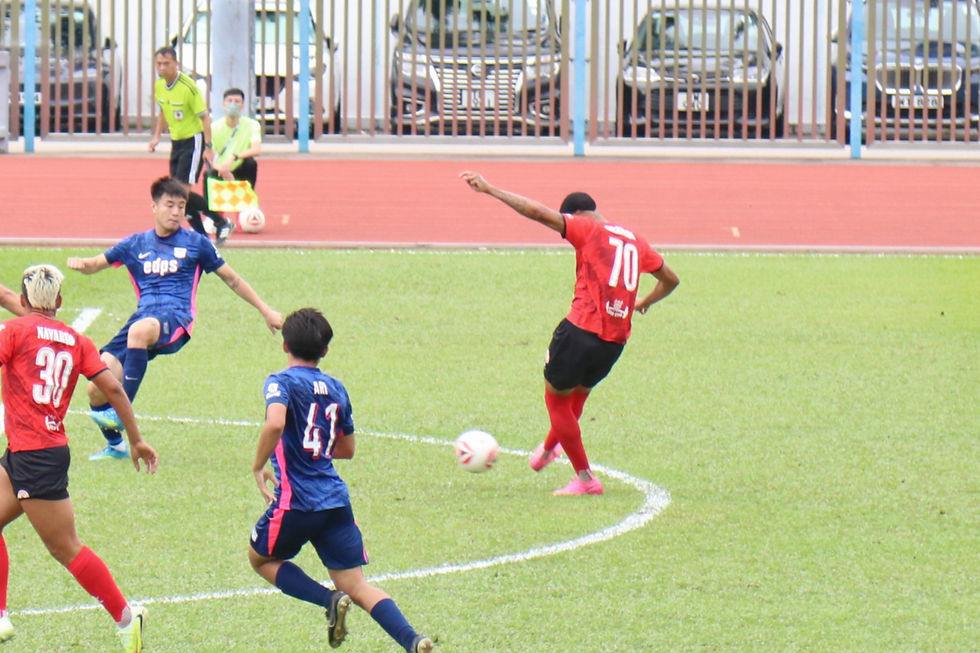
Brazilian player Samuel Granada, wearing the number 70 red jersey for Golik North District in the HKPL match against Kitchee
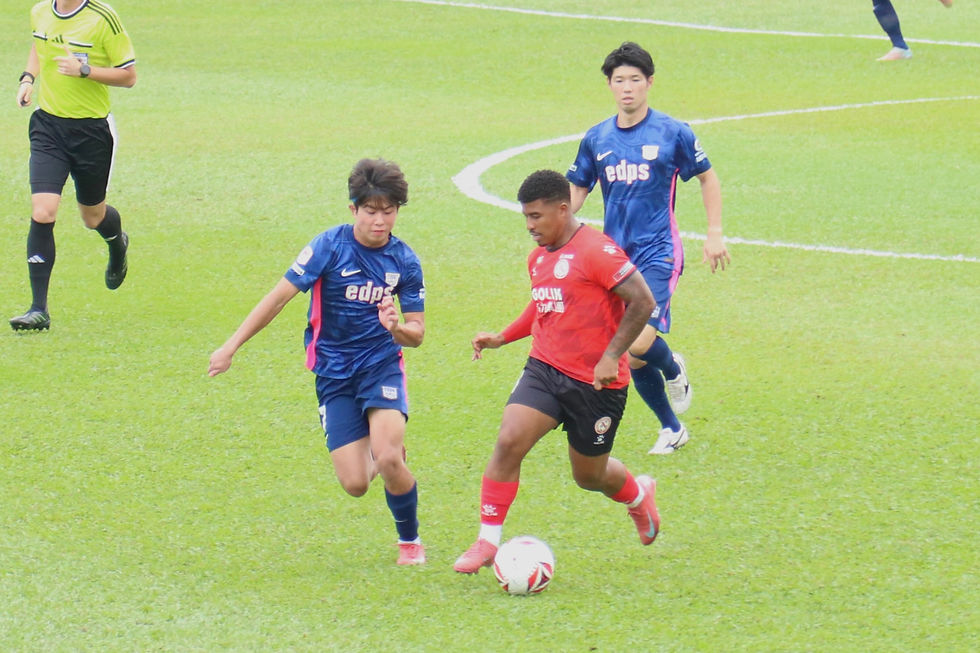
Brazillian player Weverton Pereira representing Golij North District in action during the HKPL match against Kitchee
The modern HKPL has also evolved structurally, aiming to address some of these engagement issues, most notably with the "2.5 Round-Robin" system. Officially implemented for the 2025–26 season after successful pandemic-era trials, the format divides the competition into two phases to maximize late-season stakes. After all ten clubs complete a standard home-and-away regular season, the league table splits in half, with teams carrying their accumulated points into a final single round-robin phase.
The top five teams enter the "Championship Group" to fight for the league title and continental qualification, while the bottom five form the "Challenge Group" to battle against relegation. This format forces direct matchups between close rivals and ensures the ultimate outcome of the season is decided in the dramatic final weeks.
“This new system can ensure that the championship title is only decided in the very final stages of the season,” Chan said. “This setup makes the league much more thrilling, competitive, and exciting to watch than it was in the past.”
From Scotland to Hong Kong: Leon Jones on Heritage, Professionalism, and the Future of
the Local Game


"Training and learning alongside them benefited me a lot, and the facilities there were excellent. Scottish football has a strong traditional history, the atmosphere is incredibly intense," said Jones.
Leon Jones, 28, is a professional football player in Hong Kong. He was born and raised in Scotland, studied in the US, then came to Hong Kong, where his mother was born.
His Chinese name is Chung Lok-on, which he chose to print on the jersey since he was playing in Scotland.
“I have always wanted to represent Hong Kong, as a heritage of my mum, I am very proud to put on the Hong Kong team jersey,” said Jones.
In the Asian Cup Qualifier game, Hong Kong played against India, breaking the record of more than 40,000 fans packed in the Kai Tak Stadium in June 2025. “I cherish it as much as possible, the game caught so much attention and that the atmosphere makes it exciting,” said Jones. He says the loudness of cheering from fans makes it hard to communicate with players on the field, and that is never the case in games in Hong Kong.
Unfortunately, the matches did not end in victory. The loss against Singapore was especially painful for Jones, drawing to the end of the Asian Cup Qualifier. “There were tears and sadness, but Hong Kong football must go on, I will always stay positive,”he said.
He added, especially now with fan support growing stronger and HKFA improving at all levels, he believes the Hong Kong team will definitely come back again.
During his youth career, Leon played for Hearts in the Scottish Premiership. After playing NCAA Division I college soccer in the United States, he made his professional debut with Dunfermline Athletic in the Scottish Championship. At the end of 2022, he first appeared for Eastern and began his HKPL career.
Having experienced different football environments across three places, he compares them as follows. He mentioned during his days in the US, he had the chance to do fitness training and gym work with athletes from other sports, including many Olympic gold medalists.
He is now playing for Eastern District, he says the average number of audience for premier league games is around 500. Jones said the quietness of games feels like training, sometimes making it difficult to fuel up his energy for the game.
EDFC has relatively fewer resources compared to large football clubs like Kitchee or Leeman, they do not have their own training centre. “I remember training in Tseung Kwan O football training centre, we were sharing the same training field with our opponent,” said Jones. Played in Scotland and the US, he has never encountered this situation, then he saw his teammates chatting and having fun with the opponents, he realised this is common in Hong Kong.
“As a professional player, regardless if there are 50,000 or 500 fans there watching, it's still your duty to be professional and to turn up and give your best. So that’s something I always remind myself of, and you always just find something to motivate yourself in a different way,” said Jones.
Hong Kong missed the Asian Cup finals after a 2-1 home loss to Singapore
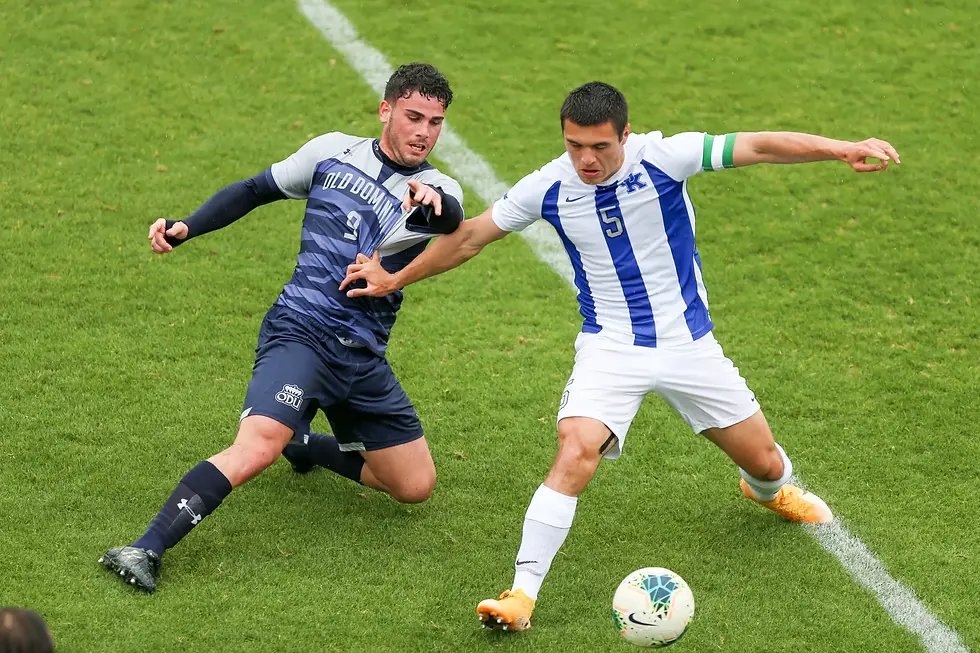
He served as team captain during his university years, representing the University of Kentucky (Photo provided by the interviewee)
Balancing the Pitch and the Ward: The Dual Life of football players

“You must have a safety net if you want to become a professional footballer,” says Lee Lok-him, a 21-year-old student-athlete who epitomises the grit required to juggle elite sports and rigorous academics.
Lee’s football journey began as a remedy for childhood asthma; his father encouraged exercise to bolster his health, eventually enrolling him in the Chelsea Football School (HK). His talent blossomed within the Chelsea-associated youth systems, leading to a brief stint in the First Division with South China and regular appearances for the Hong Kong youth national teams. It was during the 2019 U16 Asian Cup qualifiers that Lee began to envision a professional future on the pitch.
Lee signed his first professional contract with HK U23, a team managed by the HKFA under a "three-year plan".
In the summer of 2021, HKPL faced a major crisis. Two established clubs—Pegasus and Happy Valley—suddenly withdrew from the league due to severe financial problems. This left the top-flight division with only six teams, a dangerously low number that threatened the league's professional status.
To save the season and keep the league at eight teams, HKFA created a brand new, development-oriented team from scratch: HK U23.
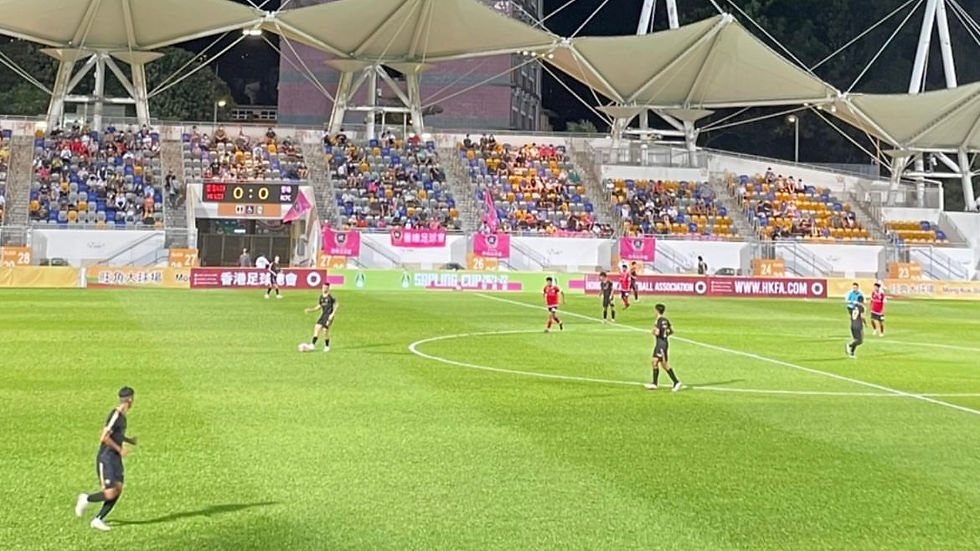
Under the plan, The HKFA pledged that the team would operate for at least three full seasons to give young players a stable environment to develop. At that time, HKFA Vice-Chairman Eric Fok, now the chairman, personally funded and oversaw the team. He committed a budget of HKD 5-6 million per season, totaling over HKD 15 million across the three-year period.
HK U23 game in Mong Kok Stadium
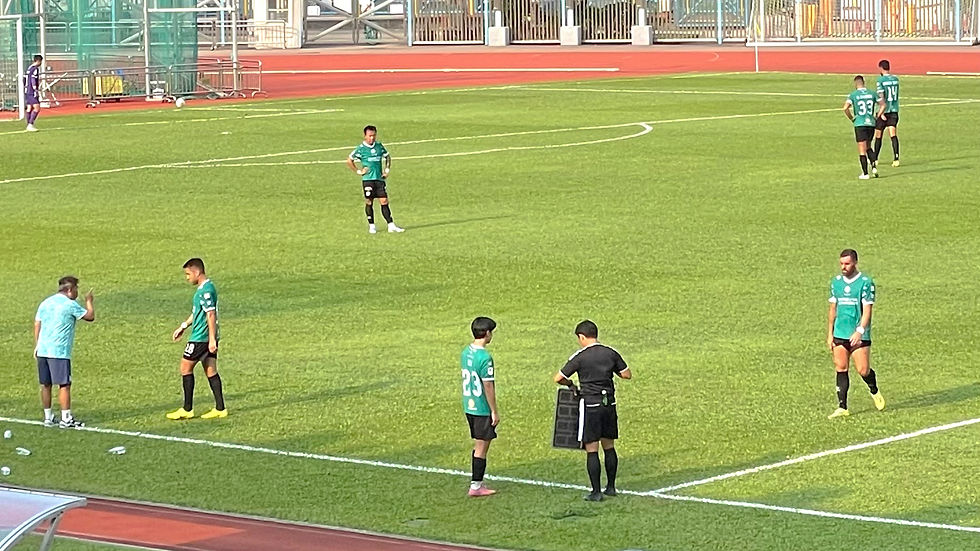
Unlike every other club in the HKPL, HK U23 was completely banned from signing foreign players.The squad was formed almost entirely of local players under the age of 23.
Despite the team winning only one of 35 matches between 2021 and 2023, and the reality of a low salary, with players' monthly income ranging from $2000 to $10000. Lee’s resolve never wavered. Instead of focusing on the scoreline, he treated the period as an essential laboratory for earning match experience and learning from veteran players.
“I wanted to challenge myself and see exactly how far my abilities could take me,” Lee explains. “My goal is to fight for playing time by improving my fitness and strength. I want to perform well enough to get noticed by the coach and ultimately help the team win.”
While football is his passion, Lee is pragmatic. “If football doesn't work out, I want a stable job,” he says. This realism led him to choose nursing—a demanding five-year program—as his major at Hong Kong Polytechnic University (PolyU).
Lee entered PolyU through the Outstanding Sportsmen Recommendation Scheme, which provides student-athletes with academic guidance, flexible study arrangements, and access to elite sports facilities.
Even with this support, his daily schedule is grueling: He first started with attending 8:30am morning classes at PolyU, then rushed to the pitch for training until noon. After training he will grab a quick lunch and head back to campus for more lectures. Sometimes he will have to participate in mandatory community service work or complete assignments.
Currently representing Tai Po, Lee trains five days a week and competes on weekends. His dedication was rewarded when he was selected for the Lunar New Year Cup squad in 2026 and appeared as a substitute in a match on April 18.
Tai Po won the title of HKPL champion in the 2024-25 season, meaning they had the chance to participate in Asian Football Confederation (AFC) Champions League Two, featuring 32 top teams from developing football nations and runners-up from top-ranked nations.
Lee appears as substitute in Apr.18,2026 HKPL game versus Golik North District
However, representing both his club in the AFC Champions League and the national team in the U23 Asian Cup qualifiers in Dubai has created significant academic friction for Lee.
“This year, away matches took me out of the classroom for six weeks,” Lee admits. “Keeping up with the curriculum has been a huge challenge. I have high standards for my grades and I don't want to let my group project teammates down, so I have to finish my assignments and revise much earlier than everyone else,” said Lee.
As he approaches his fifth year, the pressure will only intensify. Year 5 involves extensive clinical placements that often overlap with team training. Lee plans to compensate by hitting the gym for extra sessions during his internships to ensure he remains “on standby” for Tai Po at peak fitness.
Despite the mental and physical toll, Lee remains steadfast. “This is my own choice—to pursue professional football and my studies simultaneously. It’s tough, but I get a deep sense of satisfaction from it. The most important thing is being able to do what I love.”
Redefining on and off the pitch—the future for young player

Poon Pui-hin, 25, is a professional footballer in Hong Kong. Selected to represent the city in 2023, he now plays for Lee Man FC in the HKPL. Yet his toughest challenge was never just on the pitch—it was the weight of a legacy. As the son of former professional player Poon Man-chun, he grew up under constant comparison. “Before people know me as Poon Man-chun’s son, that is not what I want to be recognised as. I want people to know me for who I am,” Poon said.
Beyond his on-field career, Poon has emerged as a half-influencer figure in Hong Kong's growing football scene. With the rising popularity of the HKPL and national team, he has embraced greater public visibility—gaining around 11K followers on Instagram, where he shares football highlights, personal moments, training updates, and brand collaborations.
“From my perspective, of course, I hope more spectators come to watch matches — it would make the entire football ecosystem develop better. Because that could attract more sponsors. You can see that since 2023, after the Hangzhou Asian Games, a lot of sponsors have come in to support Hong Kong football,” said Poon. He said it is a positive development for the players, for everyone in football, and for Hong Kong as a whole.
“After all, a footballer's career isn't particularly long, maybe into their 30s or 40s at most, I think doing brand collaborations could be another avenue for players' development and give them another path when their footballer's career is over," said Poon.

Poon interacting with fans during a football fan’s event
Home and away: The ultimate "12th Man" who never missed a game of Hong Kong National team

Ng Cheuk-hang, 32, member of The Power Of Hong Kong, fans organisation founded in 2004, and that is just one of his many identities relating to football.
Introduced to the pitch by his father as a child, Ng quickly fell in love with the electrifying atmosphere of the stadiums.
By 2025, that childhood passion had evolved into absolute devotion: he travelled across Asia—to Indonesia, Singapore, China, Cambodia, South Korea, Thailand, and Bangladesh—achieving a remarkable 100 percent attendance record for all Men’s, Women’s, futsal, and FIFA "A" matches.

The Power Of Hong Kong’s first hand-crafted poster
This unwavering support comes despite a highly challenging period for the national squad. A look at Hong Kong's recent 2025–2026 fixtures reveals a team fighting an uphill battle, suffering heavy EAFF E-1 Championship losses to Japan and South Korea, and experiencing mixed results in their AFC Asian Cup Qualifiers. Out of their recent major outings, the team has lost half of their matches.
Yet, for Ng, the scoreboard is secondary. “We are always losing to the other team; it is not new for me,” Ng said. “But wherever the Hong Kong team goes, I follow. It is something I have to do.”
Ng believes that fans are the true core of Hong Kong football’s identity, and his dedication extends far beyond cheering in the stands. A journalism graduate, Ng found fresh inspiration during a post-graduation backpacking trip through South America—visiting countries like Argentina and Uruguay, where football culture is woven directly into the fabric of everyday life.

Ng held a second-handed football jersey sell during Lunar New Year holiday

This sparked the creation of his own football media platform, One Two. The name is a clever double entendre: it references the tactical "one-two pass" on the field, while also symbolising the fans as the 12th player. Through One Two, Ng combines proper journalism, interviews, and cultural storytelling to document the history of local football.
Rather than solely focusing on the star athletes, Ng turns his lens on the entire ecosystem: coaches, physiotherapists, ball boys, and even the food stall vendors outside the stadium. By using their personal experiences as an entry point, he allows readers to understand the era and the reality of professional football in Hong Kong.
“The players are doing what many see as a ‘dream job,’ yet behind the scenes they endure massive struggles, setbacks, ups and downs, and invest countless hours just to keep walking tall on the pitch,” Ng explained. “That alone is no small feat.”
Leeman VS Tai Po in “Football Fans Cup”
In March 2026, Ng organised a “Football Fans Cup” in Shek Mun Kitchee Centre, inviting cheering squads and fan groups from four Hong Kong Premier League clubs, while the "Hong Kong United" national team supporters will provide the referees.
Ng said he invited all ten teams in the Premier League to participate; unfortunately, not all teams have a large enough fan base to form teams. Four teams participated in the match, including Leeman, Kitchee, Eastern and Tai Po. Players, staff and coaches are here to support their fans, which is a rare occasion, because it’s usually the other way around.
The biggest draw—beyond giving Premier League fans a platform to battle their “arch-rivals” in person—is that genuine club coaching staff or management have occasionally stepped in to lead teams. “This type of event requires low cost, but all football fans are united, even staff, players and football coaches attended the game to show support, developing football is all about whether you care and you love it,” said Ng.

The winning team “Kitchee” receives the prize of a 16-inch drumskin used by fans across all HKPL teams
Roy Ho, who has been supporting Kitchee for nine years, said there had been several fan competitions in the past, but this has been the biggest one. He explained that similar activities have taken place before, sometimes involving friendly matches with other Hong Kong fans, which helped everyone connect and enjoy themselves.
Normally, fans are in the stands cheering, but this time they were on the pitch. “It feels like representing the club, almost like being a current player,” Ho said.
Ho admitted that playing for the club has strengthened his connection to Kitchee. “Yes, it makes the sense of belonging stronger. It feels like contributing to the club, wearing their shirt, and playing in their training centre, it’s exciting and joyful,” said Ho.
Ho emphasised how meaningful it was to join matches as a fan. “The more of these events, the better. The more people take part, the better. It helps local fans connect and exchange more,” he explained. He added that it wasn’t just about HKPL or First Division supporters—fans of overseas leagues like the English Premier League or La Liga could also join, which would even elevate the event.

Lee was the only coach in HKPL participated “Football Fans Cup” coaching Tai Po’s fans
Lee Chi-kin, 58, head coach of Tai Po since he rejoined in 2023. He first joined in 2016 and then quit in 2019. guided the team to the HKPL title in 2018-19 and 2024–25 seasons. He is more than just a coach who won the title, but also won the fans’ hearts.
He is known for his deep connections with football fans. Most events related to football fans, he is always there to support. His effort might explain why the Tai Po cheering team has the largest crowds and loudest cheers in their home games.
Following a triumphant championship season that culminated in a victory parade through the bustling heart of Tai Po, Lee has been reflecting on what makes his club’s fan culture so resilient. For him, the answer is rooted in geography and genuine human connection.
"I always feel it relates to Hong Kong's geographical environment," Lee explains. "If you're talking about foreign countries, you might not be able to support a team in the same way due to the vast distances. I think Hong Kong actually has a very advantageous inherent condition."
This proximity is more than just a logistical perk; it is a vital lifeline. Acknowledging that Hong Kong football is currently weathering a "difficult stage of development," Lee views direct communication between players, coaches, and the community as a necessity. These interactions provide a rare platform to offer fans transparency about the club’s realities, fostering a deeper, mutual understanding.
"Speaking of the victory parade, we purposely went right into the heart of Tai Po—places where everyday citizens frequently go. As a district team, I feel we have this inherent advantage. It makes it easier to build up relationships. I consider this a strong 'hardware' advantage."
That geographical hardware, however, is only as effective as the software running it—in this case, the personal commitment of the team's leadership. For Lee, fan engagement is not a marketing strategy; it is a reciprocal duty.
"I genuinely feel it has to be mutual and two-way," Lee notes. "Honestly, it's not like they are coming just to watch you pass a ball, right? But at the very least, it brings everyone joy. You support me, so I can support you."
The "Chi Sin" Spirit: Rewriting the Narrative for Hong Kong Athletes

Chester Cheung Ho-tsun, 29, co-founder of “Hong Kong Chi Sin Lo” which translates Hong Kong crazy people in Cantonese, one of the football fans organisations in Hong Kong. “Chi Sin Lo” meaning crazy guys in Cantonese, explains their style of cheering and chanting in court.
Founded in 2015, Chester and his friends were at the age of 18 to 22, the young, passionate and rebellious group as described by him decided to take another path and started HKCSL.
“We don't want to witness another ‘ice age’ period again, Hong Kong players have value, so we try to showcase it,”said Chester.
He started wondering, why can't Hong Kong players be like foreign stars with cool products? “Look at Japan recently, Japanese fans treat players like idols. Everyone has their favorite player's banner or light stick; they hold them up when players enter. I think Hong Kong can do that too,” said Chester.
The group started thinking ways to make it happen, using our connections to line up brands we're familiar with to promote the players. “The players themselves like it, and we've seen the path they're taking: attracting more commercial elements to boost their income. When their image improves, they enjoy football more and play better,” said Chester.
Recently, HKCSL started organising collaborations for Hong Kong national team players and brands. Some of the brands are HK Express and Young Master beer. They also started a project called “Extra Time” where they interview players and coaches in magazine style, where they self-funded the production costs, including makeup, photographer.
“Honestly, we don't do a lot, we just connect things, organise it in a better way: shoot for Extra Time magazine, hire makeup artists, line up sports agencies for side jobs. We want better treatment and more respect for them,” said Chester.
He explained that negative news dominated in the past, which made football players' image negative, and positive stories were rare. Since entering the Asian Cup and qualifiers, more brands have approached Hong Kong players for endorsements.
“You see them not just on power banks, but everywhere, even IKEA sells Hong Kong team merchandise. This is developing positively. We can't say we've done a lot, but we're pushing it forward,” said Chester.
Football is just a starting point, HKCSL is aiming at a broader impact, bringing the “crazy” spirit into other sports, including basketball, handball and tennis. “Many Hong Kong athletes go through the same things; Hong Kong people need a push; they're easily influenced by waves. We help by trying to create or push that wave,” said Chester.
Driving the “Red Sea” – HKFA Marketing
Cheung Kwai-ming, 27, got his first job as social media editor at the HKFA after graduating from university. At first, he wasn’t really into local football; the only reason he would watch local football matches was because of his brother, who is a professional football player.
“Football or all kinds of sports, people support it because of the sense of community, sense of identity, that is what draws them to support sports,” said Cheung. He started his job with no ambition, just doing whatever people told him to do.
The most memorable moment and biggest turning point for Cheung was when his manager joined and inspired her. She said: “This position is actually one that many Hong Kong fans fantasise about. Look at how much freedom you have here and how close you can get with the players; you can create anything you want.”
That is the time that inspired him to use his ability to create what really helps build the attention of football fans. He started collecting ideas from large football clubs’ social media in Europe and the UK, like posting POV footage right at the moment of scoring and straightforward and humorous clips.

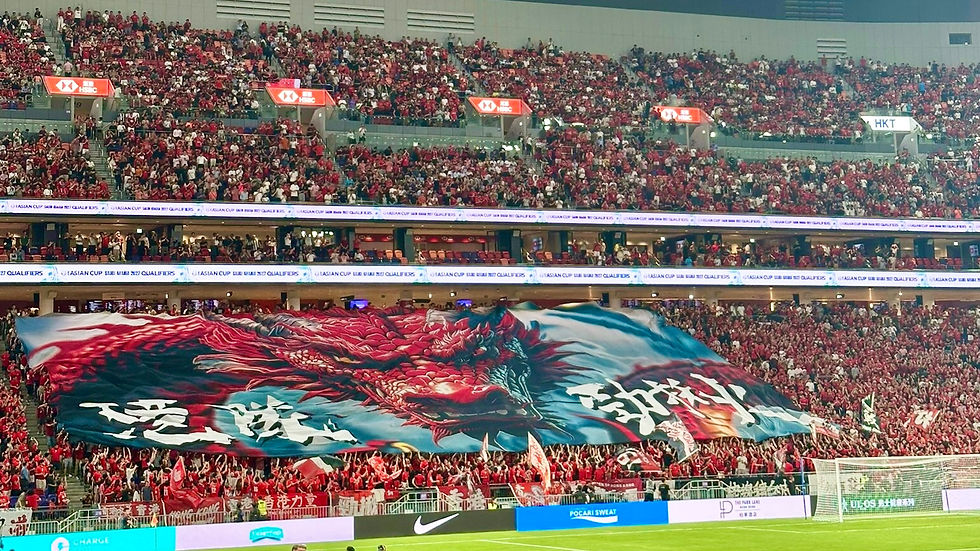
A tifo is a massive, coordinated visual display created by fans in the stadium stands—often using giant banners, flags, or colored cards—to passionately show support for their team and create an intimidating atmosphere for the opposition.
“The biggest project was the one at Kai Tak. Everything there was brand new, so we were figuring things out from scratch,” said Cheung. He looked at how foreign clubs do it — how they design advertising boards, create banners, and organise player entrances and referenced them. The most memorable part for Cheung, or for all audiences, would be the first and ever, large TIFO in the court, which was Cheung’s idea, to persuade his boss to do it.
Recently, HKFA has also had deeper interaction and proper fan engagement activities with fan groups, like setting KPIs for the number of fan engagement activities per year. Cheung explained that the fan base has grown significantly. Even for away games, people want to organise watch parties. For example, on 31 March, HKFA cooperated with Lan Kwai Fong to set up venues where fans can drink and watch matches together.
“Looking back, I think it’s related to Hong Kong people’s sense of belonging to local identity. Hong Kong is currently in a period where we really need unity,” said Cheung. He added, "Football itself is a miracle — it’s always exciting and emotional. It’s a great medium for providing a sense of identity: “I am a Hong Konger, so I watch Hong Kong football."
“But of course, it all goes back to the Kai Tak match; it doesn’t matter that we lost or won. From that moment, people started to feel that Hong Kong football is worth paying attention to,” said Cheung.
How Kitchee build Asia's best youth football academy

Kitchee Academy is a football training academy for potential elite football players aged 6 to 22 in Hong Kong. It was first started in 2008 as Barcelona Football School, but the annual franchise fees became too expensive year by year.
“In a small place like Hong Kong, charging high fees would limit access for kids from less wealthy families who might have talent but couldn't afford it. It wouldn't be fair to restrict talent with financial barriers,” said Ng Yee-yun, 31, director of Kitchee Academy.
Barcelona Football School turned into Kitchee Academy while keeping its core philosophy, which is hugely focused on systematic training and unified playing styles, also focusing on details such as small positional edges and tackling.


Instead of stalling, Kitchee redirected the funds previously earmarked for franchise fees into internal coaching education. Realising that world football evolves rapidly, the leadership team brought in experts to review their entire methodology.
"If coaches have different playing styles, how do you unify Kitchee's system?" Ng asked. The answer was the creation of the Kitchee "bible"—a meticulous, age-by-age curriculum. It dictates everything from fundamental development for 7-to-11-year-olds to the specific nuances of the club's traditional 4-3-3 formation at the 11v11 stage. This unified approach ensures that positional awareness and tackling techniques are standardized across all age groups, creating the marginal gains that set the club apart on the pitch.
Paying attention to detail is also one of the reasons behind their success. Beyond brand and support, sport science and medicine is crucial. The academy collects data across age groups, does research, and feeds objective insights to coaches—instead of “gut feeling”, that may differ between coaches.
The Jockey Club Kitchee Centre is located in Shek Mun, serving as the home of Kitchee Academy’s training sessions, it also provides pitches for public matches and other football events.
The sports science and medical facility inside the centre.
Ng explained, for example, when choosing between two similar centre-back players, the team analyses data on jump height, speed, projected adult height, cognitive reading of the game, etc., which helps decide their potential. Combined with their “bible,” it creates a clearer direction for player development.
Over the course of the season, Kitchee FC’s dominance has been evident on the pitch. By pulling 11 points clear of second place, they secured the 2026 HKPL title with four rounds still to play.
Currently, more than 12 players in Kitchee's first team are from their own training, Ng said this is a huge deal for them. “This means self-sufficiency: No need for constant poaching in this small talent pool in Hong Kong,” said Ng.
The club is currently pioneering patent-pending AI research and leaning heavily into global networks, such as their inclusion in Qatar’s prestigious Aspire Academy World Fellows network—making them only the second club in Asia to join.
Despite differing agendas among local football stakeholders, Ng remains focused on Kitchee's internal mission: producing high-quality players through structured, purposeful youth training. For the youngest recruits, that means no early specialization. Training begins with unstructured, small-sided games to build passion, followed by weekly inter-class matches where coaches can pause the game to correct tactical logic in real-time.

"Structure matters," Ng summarised, comparing football development to learning a language. "Like reading—ABC first, then sentences. Without progression or revision, kids forget or don't understand the logic."
By mastering the ABCs, building an elite scientific infrastructure, and refusing to price out local talent, Kitchee Academy isn't just producing footballers; it is actively rewriting the future of Hong Kong football.
Growing World of Hong Kong
Women’s Football

Chan is the captain of Monday Ike FC (Photo provided by the interviewee)
Chan Tsz-lam, 21, student, referee and also a football player, playing for Monday Ike, which is founded by Ng Cheuk-hang (previously interviewed). She recalled that in secondary school, she believed football was mainly for boys. While watching her male friends play, she found it interesting. Some girls were playing nearby, so she decided to join in. “Once I started, I got really excited,” she said. At around 15 years old, her passion grew quickly.
Before playing for Monday Ike, which is a team in the Second Division, she once played for district team and Kitchee women's team. She noted that everyone in the team is a beginner, which is exactly what she wants: no pressure, just to play.
The team currently trains once a week on grass, with matches on Saturdays and often another session the following day. Pitch availability on weekdays is extremely limited, forcing them to train around full-time work and studies.
A television program called “Goal to Success” produced by Viu TV turned into a big hit recently, where they gather women to form a team called “Ying Fa”, join and learn to play football. The production team hired professional coaches, prepared gear and pitches for them, having resources like a real professional football club. This show has gained huge popularity and attention for women’s football.
The team was invited to the program and played with Ying Fa. In the program, Ng spoke in the interview as the coach of the team, which sparked reactions online. In the programme, before they start shooting the programme, Ng asked the production crew whether they could use the pitch to train for an hour first, because it is rare to have the opportunity to train on grass.
He also highlighted the physical demands on everyone, including substitutes. Matches can end as late as 10 or 11 pm on distant pitches, followed by early work the next day and evening training. Recovery is often incomplete, yet players still show up.
Pitch booking remains a major challenge. Weekdays are usually reserved for other football clubs, making it difficult for newer sides like Monday to secure slots. Sunday sessions work better because most members work on Mondays.
“We take whatever we can get,” Chan said. Sometimes they negotiate with the next group to borrow half a pitch after their session. Some teams are generous; others refuse and occupy the entire pitch. Everyone is simply trying to maximise the limited time.
“Sometimes I ask myself, with such limited resources, why are we still willing to spend so much time training?” Chan said.
The team did not originally set out to become competitive. It grew out of the concept of Social Football — casual sessions designed for complete beginners, busy professionals, or anyone wanting light exercise after a long workday without the commitment of regular club training.
“The whole team was originally built on Social Football principles,” Chan explained. Later additions, including more experienced players, joined and helped turn the social sessions into a proper team. At its core, the focus remains on enjoyment rather than intense competition. Players get to experience the simple joy of kicking the ball around and even scoring in a relaxed environment.


Mak Wing-nam, 31, also a team member of Monday Ike FC , never imagined she would one day find herself on the pitch. “I started playing football because I was curious,” she explained. “I always wondered why so many men, even when they reach middle age, still go out to play football after long workdays. They work nine to five, they’re exhausted, but on weekends or evenings, they still play. I wanted to know why.”
That curiosity led her to join a free football session she saw advertised. “It was free, I thought, why not? So I joined. That was about four months ago,” she said. With no prior experience, she began from scratch. “Zero,” she laughed. Even though she had never played football before, the team was very inclusive, very patient, and everyone started from the beginning together.
Mak quickly discovered the addictive nature of the sport. “Once I tried, I was hooked,” she admitted. “Football is different—it’s a team sport. At first, you just want to score goals yourself. But over time, you realize it’s about complementing each other. Some people are good at one thing, others at another. Alone, you can’t win. You have to work together. That’s what makes it so attractive.”
Her teammates helped her adjust. She said her teammates became stricter as time went by, pushing her limits to go further. “They expected us to reach the ball, to play properly. And that’s fair—it’s a competition after all,” said Mak.
Currently, Mak plays as a substitute. “I’m on the sidelines most of the time,” she said. “I go in when someone is tired or injured. My first match was exhausting. The intensity was so much higher than in practice. Scoring felt almost impossible. In training, everything seems ideal, but in a real match, nothing is under your control.”
She is still searching for her role on the pitch. “I’m in my thirties now, and when you’re older, you see things differently,” she reflected. “I think about my position in society, my strengths as a teacher, and I try to find my position in the field. Am I better at attack or defense? Left, right, or center? Each position has its own function. I’m still exploring what suits me.”
Asked whether she dreams of playing for bigger teams or appearing on television, Mak shook her head. “I don’t play football for the exposure,” she said firmly. As an artist, she wants football to be purely a hobby; it is not a way to be famous. “Of course, sometimes friends ask me how I’m doing, and if I want to be on the television program ‘Goal to success’, but I’m happy playing once a week. That’s enough for me,” said Mak.
Her journey into football is not about fame or recognition but about discovery and growth. “Football taught me the importance of teamwork and patience,” she said. “It gave me a new perspective on myself. I didn’t expect to love it this much, but now it’s part of my life.”